Attic insulation for Dallas–Fort Worth homes

Your attic is the hottest room in your house.

On a 100-degree DFW afternoon, a thin attic pushes heat straight into the rooms below and keeps your AC running. Learn your options, see a ballpark price for your attic in seconds, and get a free, itemized estimate.

Veteran-ownedLicensed & insuredAir sealing done firstFree itemized quotes
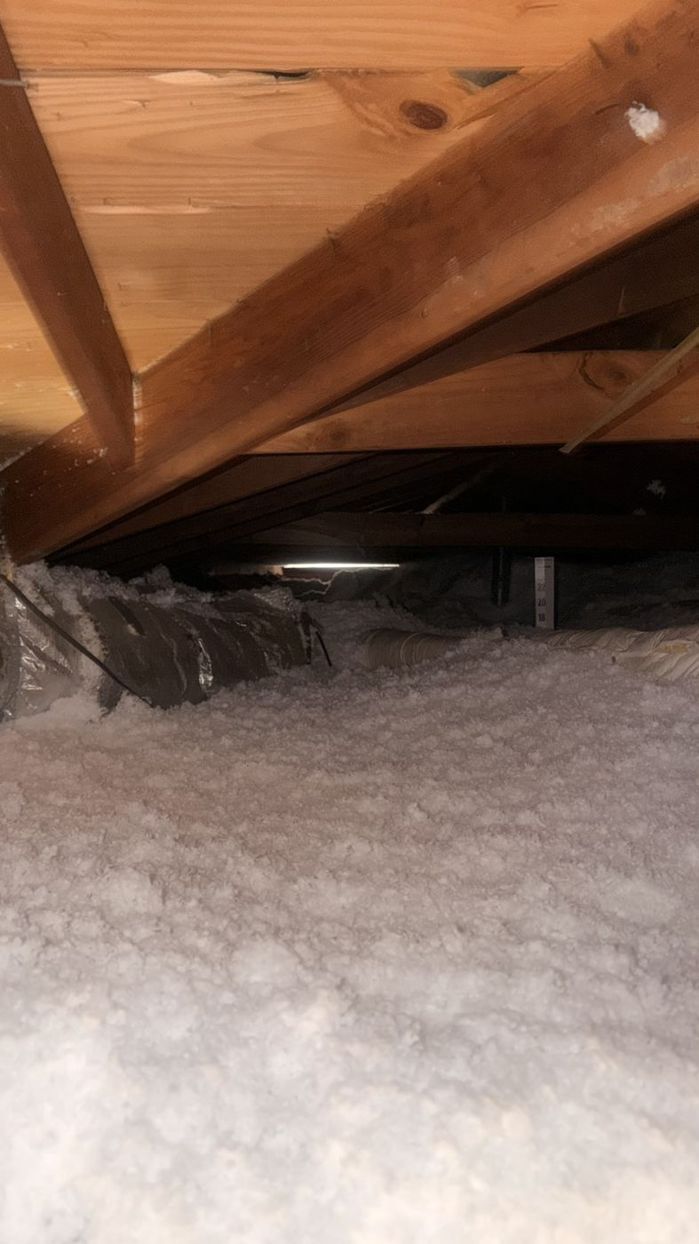
Freshly blown-in attic insulation in a North Texas home with a depth ruler stapled to the framing
Real job, real atticBlown-in insulation brought to full depth on a North Texas home. Note the depth ruler on the framing.
R-38 to R-49Recommended attic level for DFW
13–18 in.Blown-in fiberglass depth for that range
~15%Avg. heating & cooling savings from sealing + insulating*
1 dayTypical time for an attic top-up
Why it matters here

North Texas attics work harder than most

Dallas–Fort Worth sits in the Department of Energy's climate zone 3. We cool for most of the year and still get real winter cold snaps, so the attic is fighting heat in both directions.

2,825

Cooling degree days a year

DFW's long, hot summers (1991–2020 normals). A sun-baked attic gets far hotter than the outdoor air, and that heat soaks down through a thin ceiling.

2,218

Heating degree days a year

Winter matters too. The same insulation that keeps summer heat out keeps furnace heat in during cold fronts and freezes.

R-30

Or less in many older homes

Plenty of 1980s–2000s DFW homes were finished at R-30 or below, and loose-fill settles over the years. Today's recommendation is R-38 to R-49.

Your options

Insulation options for DFW homes

There is no single "best" insulation. The right choice depends on your attic, your budget, and what's up there now. Here is a plain-English rundown of what we install and when each one makes sense.

Most popular

Blown-in fiberglass

Loose-fill fiberglass blown over your ceiling. It fills around wiring, ducts and odd framing, and it can go right on top of clean, dry existing insulation.

Best for
Topping up most existing attics
R per inch
About 2.5 to 2.9
Typical cost
$1.25–$2.40 / sq ft
Dense & recycled

Blown-in cellulose

Recycled paper treated for fire and pest resistance. It packs denser than fiberglass, so you get more R-value per inch and a little better air resistance.

Best for
Attics with limited height
R per inch
About 3.2 to 3.8
Typical cost
$1.55–$2.75 / sq ft
Open framing

Fiberglass batts

Pre-cut blankets laid between joists. They work in open, easy-to-reach spaces and knee walls, but gaps and compression around obstacles cut their real-world performance.

Best for
Knee walls, open new framing
R per inch
About 3.0 to 3.2
Typical cost
Similar to blown-in
Premium

Spray foam (roof deck)

Open-cell foam sprayed under the roof deck turns the attic into a sealed, semi-conditioned space. Great when ducts and the air handler live in the attic, but it costs two to three times as much.

Best for
Sealed / conditioned attics
R per inch
About 3.5 to 3.7 (open-cell)
Typical cost
$3.80–$4.95 / sq ft
Heat reflection

Radiant barrier

Foil sheeting stapled under the rafters reflects the roof's radiant heat before it reaches the attic floor. It works best in hot climates like ours and pairs with, not replaces, insulation.

Best for
Hot attics with ducts in them
R-value
None on its own; it reflects heat
Typical cost
Quoted per attic
Always first

Air sealing & removal

We seal top plates, plumbing and wiring holes, light cans and the attic hatch before any insulation goes in. Wet, moldy or rodent-damaged insulation gets vacuumed out first.

Best for
Every attic job
Removal
About $1.00–$2.00 / sq ft extra
Hatch cover
Insulated, weatherstripped
How much do you need

R-38 to R-49 is the DFW target

Insulation is rated by R-value, its resistance to heat flow. Higher is better. For climate zone 3, ENERGY STAR recommends R-49 for an attic with little or no insulation and R-38 when adding to an attic that already has 3 to 4 inches.

The Texas residential energy code requires R-38 in the ceiling for new homes on the prescriptive path. That's the minimum for new construction, not the goal for an older home.

MaterialR-38R-49
Blown-in fiberglass13–14 in.17–18 in.
Blown-in cellulose10–11 in.13–14 in.
Fiberglass batts~12 in.~15–16 in.

Settled depths, approximate. Always check the coverage chart printed on the bag for the exact product.

Where does your attic fall?

R-11
~4 in. · poor
R-19
~7 in. · below code
R-30
~11 in. · common in older homes
R-38
~14 in. · good
R-49
~18 in. · best

Depths shown for blown-in fiberglass. If you can see the tops of your ceiling joists, you almost certainly have less than about R-15.

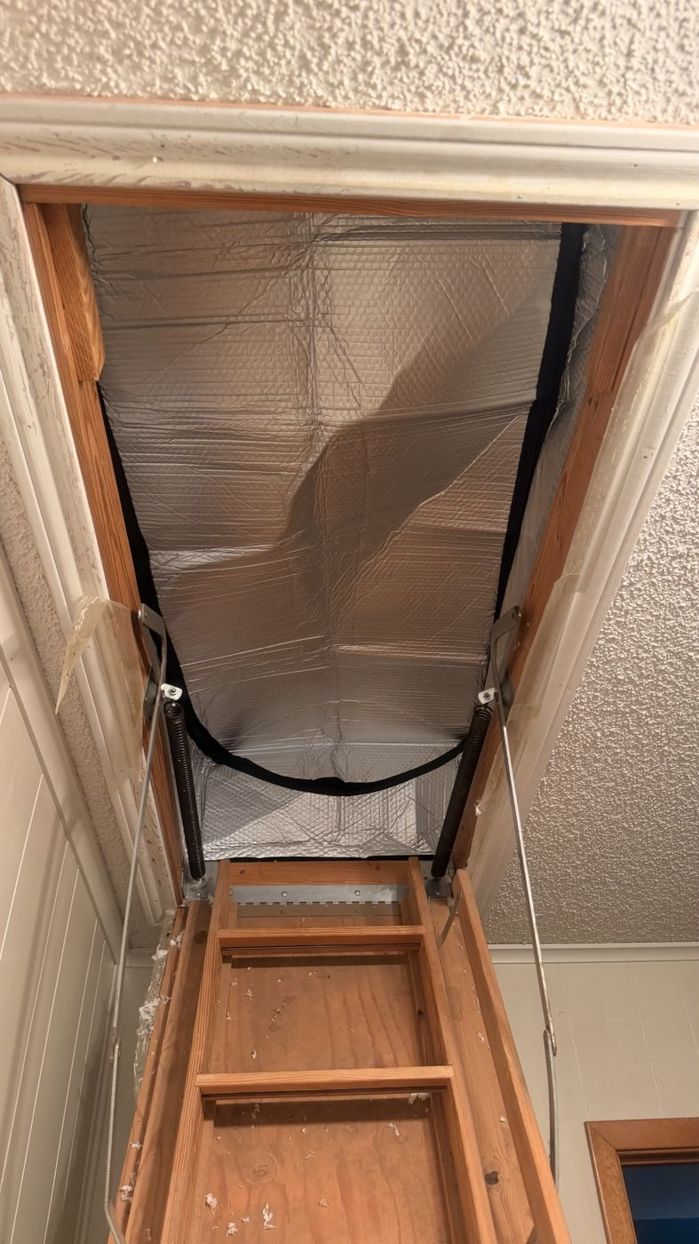
Pull-down attic stairway with an insulated, zippered attic access cover installed
Five-minute check

How to check your attic

All you need is a flashlight and a tape measure. Write down the depth and plug it into the cost estimator below.

  1. Open the hatch or pull-down stairs.Stay on the framing or decked walkway. Ceiling drywall won't hold your weight.
  2. Measure depth in three or four spots.Measure away from the hatch, where insulation is usually packed down.
  3. Look for thin spots and gaps.Check the eaves, around recessed lights, and anywhere HVAC techs have walked.
  4. Check the access itself.An uninsulated hatch or pull-down stair, like the one we covered above, is a big hole in your ceiling.
  5. Look for dirty insulation.Dark streaks around fixtures and wall tops usually mean air is leaking up from the house.

Safety first: DFW attics can top 130°F in summer. Go up in the morning, wear a mask, and don't touch wiring. Or skip the climb, and we'll measure it for you during a free estimate.

Insulation cost estimator

What will your attic job cost?

Tell us your attic size, what's up there now, and what you want. You'll see a cutaway of your attic and a ballpark price built from the same per-square-foot rates we use on real North Texas insulation jobs.

1 · Attic size
sq ft
Usually the footprint of your top floor.
2 · What's there now
inches
3 · New insulation
4 · Add-ons
Attic cutaway Side cutaway of an attic showing insulation depth for your selections.
Estimated job price
$0

Get an exact quote for this job

How this estimate is built

  • Blown fiberglass is priced from the manufacturer's bag chart (bags per 1,000 sq ft for each R-value), plus install labor per square foot. These are the same rates we use on real attic jobs in North Texas.
  • Removing old insulation is a per-square-foot add. Air sealing, duct sealing, stair covers, and stairs are flat prices per home.
  • Cellulose, batts, and spray foam use typical DFW installed rates. Spray foam is priced by roof-deck area, about 15% more than the attic floor.
  • The range runs from 8% under to 15% over our base price, to cover access, pitch, and prep.

What changes the final price

  • Tight or low-pitch attics, lots of ductwork in the way, and how far the hose has to run.
  • How much air sealing your home needs. Older homes usually have more leaks.
  • Wet, moldy, or pest-damaged insulation, or crushed ducts we find during the visit.
  • This is a ballpark for planning, not a quote. Your written price comes after we measure your attic in person. It's free.
Pricing

What attic insulation costs in DFW

Typical Dallas–Fort Worth installed prices as of November 2026, based on published national cost guides and local pricing. Your price depends on attic size, access, current insulation and how much prep is needed.

JobTypical installed cost
Blown-in fiberglass, topping up existing$1.25–$1.75 / sq ft
Blown-in fiberglass, full depth$1.60–$2.40 / sq ft
Blown-in cellulose, top-up to full depth$1.55–$2.75 / sq ft
Removing old or damaged insulation$1.00–$2.00 / sq ft extra
Open-cell spray foam at the roof deck$3.80–$4.95 / sq ft

For a typical 1,500 sq ft attic, a blown-in top-up runs about $1,900–$4,100. A 2,000 sq ft attic runs about $2,500–$5,500. If old insulation has to come out first, add roughly $1,500–$4,000.

Rebates & credits

Rebates and tax credits in 2026

Homeowners ask about these on almost every estimate. Here's where things stand as of November 2026.

Paused until 2027

Oncor Home Energy Efficiency program

Oncor pays incentives through approved service providers for insulation, air sealing and weatherization in its service area. Oncor reports its 2026 funding is fully used and says to check back in January 2027. The program typically runs February through November.

Ended

Federal 25C tax credit

The federal Energy Efficient Home Improvement Credit for insulation and air sealing ended after December 31, 2025, under the 2025 federal budget law. Work done in 2026 no longer qualifies.

Utility programs change every year, so confirm current terms before counting on a rebate. Sources: Oncor, EnergySage.

How we work

Seal first. Then insulate to depth.

It's the same order of work we follow on energy-efficiency upgrades for city housing programs in Denton County, and it's what makes the insulation actually pay off.

Inspect & measure

We measure depth, look for leaks, check ducts and ventilation, and give you an itemized quote.

Seal the attic floor

Top plates, plumbing and wiring holes, light cans and flue chases, with fire-rated materials where required.

Prep & protect

Vent baffles at the eaves, an insulated and weatherstripped hatch, and duct fixes before anything gets buried.

Insulate & verify

Blow to the target depth with depth rulers on the framing, so you can see exactly what you paid for.

True Allied LLC logo

Dallas Insulation Company is a service of True Allied LLC

True Allied is a veteran-owned general contractor based in Denton and serving homeowners across Dallas–Fort Worth. Owner Mckay Harcus served six years in the U.S. Army, and he is personally accountable for every job: you get a direct line to the owner, not a call center. We've completed blown-in insulation, air sealing, attic access covers and duct work on occupied homes through city housing programs. Learn more at trueallied.com.

Service area

Insulation across Dallas–Fort Worth

We install attic insulation throughout the DFW metroplex, from Denton County down through Dallas, Collin and Tarrant counties.

Dallas Fort Worth Plano Frisco McKinney Denton Lewisville Flower Mound Highland Village Corinth Little Elm Argyle Carrollton Coppell Richardson Allen Garland Irving Grand Prairie Arlington Southlake Keller
FAQ

Common questions

How much attic insulation does a Dallas home need?

R-38 to R-49. ENERGY STAR recommends R-49 for an attic with little or no insulation in climate zone 3, which covers Dallas–Fort Worth, and R-38 when adding to an attic that already has 3 to 4 inches. With blown-in fiberglass that's roughly 13 to 18 inches of settled depth.

Can you add new insulation on top of old insulation?

Usually, yes. If the existing insulation is dry, clean and free of pests or mold, new blown-in insulation can go right on top. Wet, moldy or rodent-contaminated insulation should be removed first.

How long does an attic insulation job take?

Most top-ups on a typical DFW home take one day, including air sealing. Jobs that need old insulation removed or ductwork repaired can take two to three days.

Is blown-in or batt insulation better for an attic?

For most existing attics, blown-in is the better choice. It fills around wiring, ducts and odd framing without gaps, and it's faster to install over existing insulation. Batts work well in open, easy-to-reach spaces but are easy to install poorly.

Is spray foam worth it in North Texas?

Sometimes. Open-cell foam at the roof deck makes the most sense when your ductwork and air handler are in the attic and you want the whole attic sealed and close to indoor temperature. For most homes, air sealing plus blown-in insulation on the attic floor gives the best return for the money.

Do radiant barriers work in Texas?

In hot, sunny climates like ours, a radiant barrier can noticeably cut attic heat, especially when ducts run through the attic. It reflects heat rather than resisting it, so it works alongside insulation, not instead of it.

How much does attic insulation cost in Dallas?

Most DFW attic top-ups with blown-in fiberglass run about $1.25 to $2.75 per square foot, or roughly $1,900 to $4,100 for a 1,500 sq ft attic. Removing old insulation, air sealing and duct work add to that. Use the cost estimator above for a ballpark on your attic, then we'll give you a firm, itemized price after a free visit.

Are there rebates for insulation in 2026?

Oncor's 2026 insulation incentive funding is used up, and Oncor says to check back in January 2027. The federal 25C tax credit for insulation ended after December 31, 2025. We'll tell you about any program that applies when we quote your job.
Free estimate

Get a free, itemized attic estimate

Tell us a little about your home and we'll reach out within one business day to schedule a visit. We'll measure your attic, check for leaks and duct issues, and give you a written quote with every line item spelled out.

  • Veteran-owned, licensed and insured
  • Air sealing and baffles included in every proposal
  • Depth rulers installed so you can verify the work
  • A direct line to the owner

Prefer to talk?
940.597.8777

We'll only use your information to respond to your request.

Call 940.597.8777Free Estimate